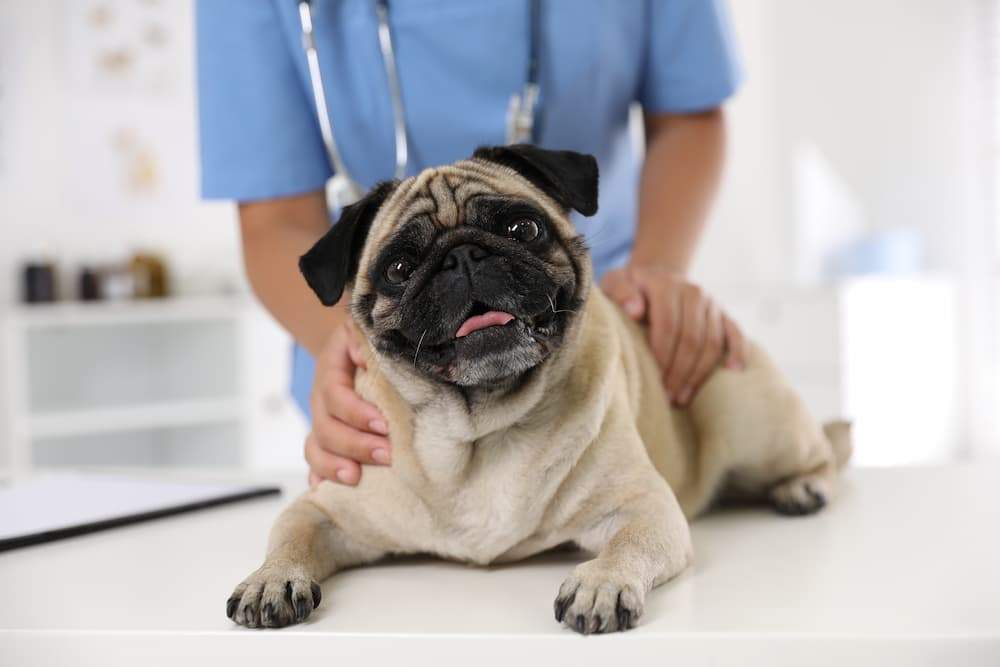
Updated: Aug 2026. Your dog’s cough may sound like a goose honk, or maybe they’ve started hacking after excitement or exercise. While occasional coughing might not raise alarm, persistent, harsh coughing can point to a condition called collapsing trachea. A collapsing trachea in dogs is especially common in small breeds and can impact their quality of life if left untreated.
This UrgentVet expert guide will help breakdown how to understanding the signs, causes, and available treatment options for tracheal collapse can help you care for your pup.
What Is Tracheal Collapse in Dogs?
A collapsed trachea in dogs is a condition in which the trachea (or windpipe) loses its rigidity and begins to flatten. The trachea is a flexible tube supported by C-shaped cartilage rings that help keep the airway open. In dogs with this condition, those rings weaken or lose their structure, causing the airway to narrow or collapse, especially during breathing, barking, or excitement.
This can lead to coughing, wheezing, or difficulty breathing. Tracheal collapse can be progressive, meaning symptoms may worsen over time without management. It’s a chronic condition, but with proper care, many dogs live comfortably for years.
Common Breeds at Risk for Tracheal Collapse
Tracheal collapse is most often seen in small and toy breeds, likely due to genetic predisposition and the smaller diameter of their windpipes. Commonly affected breeds include:
- Yorkshire Terriers
- Pomeranians
- Chihuahuas
- Toy Poodles
- Pugs
- Shih Tzus
- Malteses
These dogs are more vulnerable because the cartilage in their trachea may be softer or less developed. Age and obesity can also increase risk, as the trachea weakens further with time or extra pressure.

Symptoms of a Collapsing Trachea in Dogs
Recognizing the early symptoms of a collapsing trachea in dogs can help you seek care before it worsens. Look for:
- Honking cough: A loud, goose-like cough that may occur during excitement, pulling on the leash, or after eating or drinking.
- Labored breathing: Your dog may struggle to breathe, especially during activity or warm weather.
- Gagging or retching: Some dogs sound like they’re trying to cough something up but produce nothing.
- Worsening cough at night or when lying down: Gravity and pressure can affect the airway more in certain positions.
- Exercise intolerance: A reluctance to walk or play like they used to.
- Fainting or collapse: In severe cases, lack of oxygen can cause syncope or brief loss of consciousness.
During episodes, a collapsed trachea in dogs has a sound that is very distinct, which can help differentiate this condition from typical kennel cough.
Stages of Tracheal Collapse in Dogs
The stages of tracheal collapse in dogs range from mild to severe and help guide treatment.
- Grade I: Tracheal rings are slightly softened, with minimal airway narrowing. Mild coughing is present, often during excitement.
- Grade II: The trachea is about 50% collapsed. Coughing is more frequent and may occur at rest.
- Grade III: Around 75% of the airway is flattened. Breathing becomes labored, and dogs may gag, wheeze, or avoid exercise.
- Grade IV: The airway is nearly completely collapsed. Dogs may struggle to breathe even at rest and require urgent intervention.
Early-stage collapse often goes unnoticed, but catching it early can dramatically improve long-term outcomes.
What are the Causes of Tracheal Collapse in Dogs?
Tracheal collapse can result from a mix of genetic, environmental, and health-related factors. While some dogs are born with weaker cartilage, others may develop the condition over time due to external stressors.
- Genetic weakness in tracheal cartilage: Many dogs with collapsing trachea are predisposed from birth. In these cases, the cartilage rings that normally hold the windpipe open are underdeveloped or structurally weak, making collapse more likely as the dog ages.
- Chronic respiratory inflammation: Conditions like chronic bronchitis or frequent upper respiratory infections can inflame the trachea. Over time, this inflammation can erode the structural integrity of the windpipe, making it more prone to collapse.
- Obesity: Excess body weight places more pressure on the airway, especially during activity. It can also worsen breathing issues in dogs already predisposed to tracheal problems.
- Environmental irritants: Exposure to cigarette smoke, dust, aerosols, or air pollution can irritate the airway lining and contribute to long-term respiratory stress.
- Use of collars: Frequent pulling or pressure from a traditional neck collar can strain the trachea. Over time, this added stress may damage cartilage or worsen an already weak airway structure.
- Age-related degeneration: Even in dogs not born with weak tracheal cartilage, the tissue may deteriorate with age, especially if other risk factors like weight or inflammation are present.
Understanding the root cause can help pet owners and veterinarians tailor a more effective treatment and long-term management plan.
How Do Veterinarians Diagnose Collapsing Trachea in Dogs?
To confirm the diagnosis, your veterinarian will start with a thorough physical exam and listen to your dog’s breathing and cough. Diagnostics may include:
- X-rays: These help visualize the trachea’s shape and see if it narrows during breathing.
- Fluoroscopy: A real-time X-ray video allows the vet to observe the trachea in motion.
- Endoscopy: A small camera is inserted into the airway under anesthesia to view the trachea from the inside.
- Bloodwork: To rule out other underlying health conditions.
- Additional imaging: Such as ultrasound or echocardiography, if heart disease is suspected.
These tests help determine the severity of the condition and whether the collapse is occurring in the cervical (neck) or thoracic (chest) part of the trachea.
Treatment for a Collapsing Trachea in Dogs
Treatment options for a collapsing trachea will largely depend on your dog’s overall health, age, and the progression of the condition. A veterinarian can evaluate your dog and provide clear, effective recommendations.
Medications
Treatment for collapsed trachea in dogs often starts with medications to control inflammation, coughing, and secondary infections. These may include:
- Cough suppressants (e.g., hydrocodone or butorphanol) to reduce irritation and coughing fits.
- Anti-inflammatories such as corticosteroids to reduce swelling in the trachea.
- Bronchodilators that help open up the airways and make breathing easier.
- Antibiotics if secondary infections are present.
- Sedatives or anti-anxiety meds in dogs whose coughing worsens with excitement.
Surgery
In severe or unresponsive cases, surgery may be recommended. The two most common procedures are:
- Tracheal stent placement: A mesh stent is placed inside the trachea to keep it open.
- Tracheal rings: Surgical rings are placed outside the trachea to provide support (less common).
Surgical options carry risks and are generally reserved for dogs who don’t respond to medication. They are more often performed by veterinary specialists.
Managing Tracheal Collapse in Dogs
Living with a dog with a collapsed trachea means making thoughtful lifestyle adjustments. Weight loss is often one of the most important and effective steps. Switch to a harness instead of a collar to reduce pressure on the neck. Keep your home free of smoke and airborne irritants, and avoid exposing your dog to extreme heat or excitement that may trigger coughing fits.
Many dogs live comfortably with tracheal collapse when their environment, weight, and medications are well managed. Stay in close contact with your vet and monitor for any changes in symptoms.
Need Veterinary Assistance? Find an UrgentVet Near You!
If your dog is showing signs of tracheal collapse, especially coughing, labored breathing, or exercise intolerance, it’s important to see a vet as soon as possible. Our UrgentVet team is here for after-hours support, quick diagnostics, and quality care. We’re open nights, weekends, and holidays to give you peace of mind.
Schedule your appointment online or walk in to your neighborhood UrgentVet clinic location today!
Collapsing Trachea in Dogs FAQs
How long can a dog live with a collapsing trachea?
With proper treatment and lifestyle adjustments, many dogs live for years with a collapsing trachea. Mild cases may require only medication, while more advanced stages need lifelong management.
What conditions are similar to tracheal collapse in dogs?
Other conditions like kennel cough, heart disease, laryngeal paralysis, or chronic bronchitis can produce similar coughing or breathing sounds. That’s why an accurate veterinary diagnosis is essential.
What does a collapsed trachea cough sound like?
The sound of a collapsed trachea in dogs is often described as a loud, dry, honking noise, similar to a goose honk. It tends to worsen with excitement, exercise, or pressure on the neck.
What is the treatment for collapsed trachea in dogs?
Treatment for collapsed trachea in dogs typically includes cough suppressants, bronchodilators, and anti-inflammatories. Surgery may be recommended in advanced cases. The best approach depends on the severity and your dog’s overall health.
Photographer: New Africa / Shutterstock