Cat skin issues can be easy to miss at first, but they often become uncomfortable quickly once they take hold. Mange in cats is one of those conditions that can escalate without clear warning, leaving many pet parents unsure what they’re seeing or how serious it might be. This guide will help you make sense of the signs of cat mange, understand what’s causing them, and know what to do next.
What Is Mange in Cats?
Mange in cats is a skin condition caused by microscopic mites that live on or within the skin. These mites can irritate the skin, trigger inflammation, and lead to itching, hair loss, and secondary infections. The skin responds the same to many different irritants, so it is important to find the cause of the symptoms to treat effectively.
Mange isn’t a single disease; it’s a general term that covers several types of mite infestations. Some are relatively mild and localized, while others can spread and cause more widespread discomfort. In most cases, mange on cats develops when mites multiply beyond what the skin can tolerate, often taking advantage of a weakened immune system or close contact with other animals.
Types of Mange in Cats
There are several forms and types of cat mange, each caused by a different type of mite. While they share some similarities, how they look and how they’re treated can vary.
Demodectic Mange (Feline Demodicosis)
Caused by Demodex mites, this form often develops when a cat’s immune system is compromised. It may appear as patchy hair loss or mild irritation, typically around the face, neck, or eyelids.
Notoedric Mange (Feline Scabies)
This is a highly contagious form caused by Notoedres cati mites. It often starts around the ears and spreads to the face and neck, causing intense itching and crusty skin lesions.
Cheyletiellosis (Walking Dandruff)
Sometimes called “walking dandruff,” this condition is caused by mites that live on the skin’s surface. It often appears as flaky skin that seems to move, along with mild itching.
Otodectic Mange (Ear Mites)
Ear mites are one of the most common causes of mange on a cat, especially in kittens. They live in the ear canal and can cause scratching, head shaking, and dark, coffee-ground appearing debris in the ears.
Trombiculosis
Also known as chigger infestations, this type is more common in outdoor cats. It can cause localized irritation, especially on the face, paws, or belly.
Sarcoptic Mange
Less common in cats but still possible, this form can cause severe itching and widespread skin irritation. It is also contagious and may affect other animals.
Signs & Symptoms of Mange in Cats
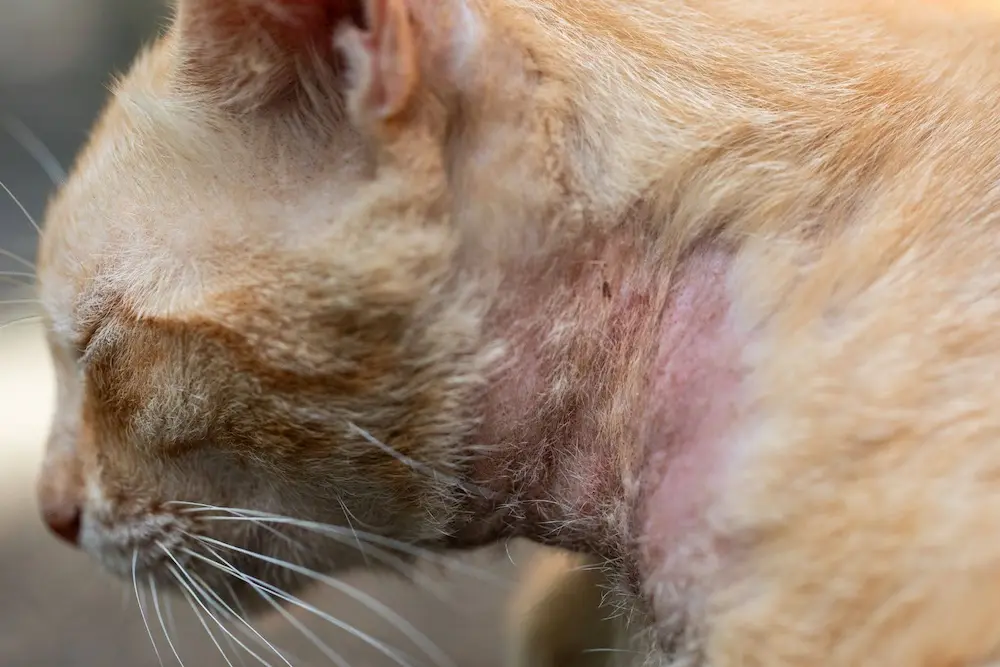
The signs of mange in cats can vary depending on the type and severity, but many symptoms overlap. Paying attention to early changes can help you catch early mange in cats before it becomes more advanced.
Common signs and symptoms of cat mange include:
- Persistent itching or scratching: Cats may scratch, bite, or rub affected areas more than usual, often to the point of causing skin damage.
- Hair loss (patchy or widespread): You may notice thinning fur or bald spots, especially around the ears, face, or neck.
- Red, inflamed, or irritated skin: The skin may appear pink, raw, or sensitive to the touch.
- Crusty or scaly patches: As mange progresses, thickened or crusted-over skin can develop, particularly with scabies-type mites.
- Flaky or dandruff-like debris: This is especially common with walking dandruff and may be mistaken for dry skin.
- Ear irritation and debris: With ear mites, you may see dark, coffee-ground appearing buildup in the ears along with scratching or head shaking.
- Behavior changes: Irritability, restlessness, or hiding can occur as discomfort increases.
In early-stage cat mange, symptoms may be subtle, like small patches of hair loss or mild itching. However, you may need to look closely to recognize the signs. For example, early-stage mange in black cats may be harder to spot at first, showing up as faint thinning or slight skin changes before becoming more obvious.
Causes of Mange in Cats
What causes mange in cats? These mites are often spread through contact, but other factors can also play a role. Often, cat mange comes down to a combination of exposure and the body’s inability to keep mites in check.
Common causes of mange in cats include:
- Direct contact with infected animals: Many mites are contagious and spread easily between cats, especially in multi-pet households or outdoor environments.
- Weakened immune system: Cats with underlying health issues or stress may be more susceptible to mite overgrowth.
- Outdoor exposure: Cats that spend time outside are more likely to encounter mites in the environment or from other animals.
- Poor grooming or hygiene: While not always the cause, poor grooming can contribute to worsening symptoms.
- Environmental contamination: Some mites can survive briefly in bedding or shared spaces, increasing the risk of transmission.
How Veterinarians Diagnose Mange in Cats
If you suspect mange on cat, a veterinary visit is the best next step. Diagnosis typically begins with a detailed history, including when symptoms started and whether your cat has had contact with other animals.
Your veterinarian will perform a physical exam, closely inspecting the skin, ears, and coat. To confirm the presence of mites, they may use:
- Skin scrapings to collect samples for microscopic examination
- Tape tests to identify surface mites
- Ear swabs if ear mites are suspected
- Fungal or bacterial testing to rule out other skin conditions
In some cases, additional testing may be needed if symptoms overlap with allergies or other dermatological issues. The goal is to pinpoint the exact cause so treatment can be targeted effectively.
Treatment of Mange in Cats
Treatment for mange in cats depends on the type of mite involved and how advanced the condition is. The good news is that most cases respond well to treatment when addressed early.
Treatment options cat mange may include:
- Topical medications: These are applied directly to the skin or ears to kill mites and reduce inflammation.
- Oral medications: In some cases, medications are given by mouth to treat more widespread infestations or to decrease the allergic response to give your cat relief.
- Medicated shampoos or dips: These help soothe the skin and remove mites, especially in more severe cases.
- Treatment of secondary infections: If scratching has led to bacterial or fungal infections, additional medications may be needed.
- Environmental cleaning: Washing bedding and cleaning shared spaces helps prevent reinfestation.
If you’re researching how to treat mange in cats, the most important step is to follow your veterinarian’s guidance closely. Cat mange treatment often requires consistency over several weeks to fully eliminate mites. Avoid using over-the-counter treatments as these could be toxic to your cat.
Recovery and Management of Mange in Cats
Recovery timelines can vary, but most cats begin to improve within a few weeks of starting treatment. As your cat heals, you may notice reduced itching, healthier skin, and gradual hair regrowth.
During recovery:
- Follow all treatment instructions carefully
- Complete the full course of medication, even if symptoms improve
- Keep your cat’s environment clean
- Limit contact with other pets if advised
Cats with mange can become more comfortable quickly with proper care, but stopping treatment too soon can make it easy for the mange to come back.
Prevention of Mange in Cats
While not all cases can be prevented, there are practical steps you can take to reduce the risk of mange on cats:
- Keep your cat’s environment clean and regularly wash bedding
- Avoid contact with infected animals when possible
- Maintain regular veterinary checkups
- Use recommended parasite prevention products all year round
- Monitor for early signs of mange in cats, especially after outdoor exposure
Need Veterinary Assistance? Find an UrgentVet Near You!
If your cat is showing signs of skin irritation, hair loss, or persistent scratching, it’s worth getting a professional opinion. UrgentVet offers convenient care for non-life-threatening conditions, including skin concerns like mange.
Our teams understand how uncomfortable mange on a cat can be and are here to help you get answers quickly. With UrgentVet locations across the U.S., you can walk in or book an appointment online for timely, compassionate care.
FAQs About Mange in Cats
How Do Cats Get Mange?
Cats typically get mange through direct contact with infected animals or environments where mites are present. This can include other cats, shared bedding, or outdoor exposure. In some cases, mites are already present on the skin in small numbers and multiply when a cat’s immune system is weakened.
Is Mange in Cats Contagious to Humans?
Some types of mange can be transmitted to humans, but they typically cause only mild, temporary skin irritation. You should seek medical care for yourself if lesions are noted. It’s still important to wash your hands and limit contact until your cat is treated.
How Contagious Is Mange in Cats?
Certain forms, like feline scabies and ear mites, are highly contagious among animals. Prompt treatment helps prevent spreading to other pets.
What Does a Cat with Mange Look Like?
Pet parents often ask what does mange look like on a cat. Common signs include hair loss, scaly or crusty skin, redness, and frequent scratching.
Can a Cat Survive Mange?
Yes, most cats recover fully with proper treatment. Early intervention improves outcomes and reduces discomfort.
How Can Cats Get Feline Scabies?
Feline scabies spreads through direct contact with infected animals or contaminated environments.
Can You Treat Mange in Cats at Home?
While you may be tempted to look for ways to get rid of mange on cats at home, professional care is recommended to ensure the mites are fully eliminated and to prevent complications. Avoid using over-the-counter treatments without the recommendation of a veterinarian as these could be toxic to your cat.
Is Mange Curable in Cats?
Yes, with the right treatment for mange in cats, the condition is typically curable. Following your veterinarian’s instructions is key to a full recovery.
Photographer: Aleksandr Rybalko / Shutterstock