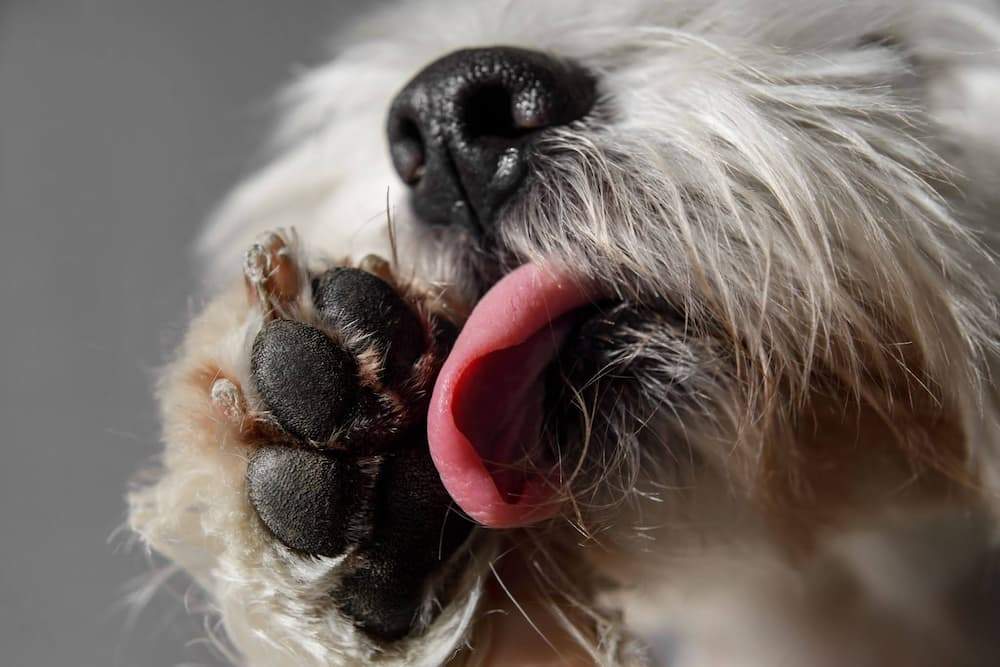
Licking is a normal part of how dogs clean themselves, soothe irritation, and even communicate. But when it becomes too frequent or focused, this kind of excessive licking in dogs is often a sign that something else is going on beneath the surface. Paying attention to changes in your dog’s grooming habits can help you catch issues early and keep them more comfortable.
This UrgentVet expert guide covers what to know about the causes of excessive licking, chewing and grooming in dogs, as well as, treatment options and how to stop constant dog licking behaviors.
Is My Dog Licking Themselves Excessively?
All dogs lick themselves to some degree. It’s part of routine grooming, much like how they scratch or shake off dirt. The difference comes down to frequency, intensity, and focus.
Normal licking is occasional and short-lived. Your dog may clean their paws after being outside or groom their coat briefly before settling down.
Excessive licking in dogs tends to look different. You might notice:
- Repeated licking of the same spot, especially paws, legs, or belly
- Sessions that are longer and harder to interrupt
- Licking that leads to redness, thinning fur, or irritated skin
- Behavior that happens daily or multiple times a day
If your dog is constantly licking one area or seems unable to stop, it’s worth taking a closer look at what might be causing it.
Why Is My Dog Licking Themselves Excessively?
There isn’t a single answer to why do dogs lick themselves more than usual. Licking can be driven by physical discomfort, underlying health issues, or behavioral factors. In many cases, it’s the body’s way of responding to irritation or trying to self-soothe.
If you’ve been trying to figure out why your dog is constantly licking, the key is to look beyond the behavior itself and consider what your dog might be reacting to – whether it’s something on their skin, something internal, or something in their environment.
Common Causes of Excessive Licking in Dogs
Excessive licking in dogs rarely happens without a reason. If you’re wondering why your dog licks so much, it’s often a combination of factors rather than a single cause. Pinpointing both the physical and behavioral factors usually leads to the best outcome. The most common causes of excessive licking in dogs, includes:
1. Allergies / Allergen Flare-Ups
Allergies are one of the most frequent reasons for dog licking excessively, especially when it involves the paws, ears, or underside of the body. These reactions can be seasonal or ongoing, which is why some dogs show flare-ups at certain times of year while others deal with symptoms year-round.
Environmental Allergies
Environmental allergies in dogs include pollen, grass, dust mites, or mold. Dogs may lick their paws after going outside or develop ongoing irritation during certain seasons. You may also notice symptoms worsening after time spent outdoors or improving with bathing and paw cleaning.
Food Allergies
Some dogs react to specific ingredients in their diet. Dog food allergies can lead to skin irritation, ear infections, and persistent licking. Unlike environmental allergies, food-related issues tend to stay consistent rather than changing with the seasons.
Flea Allergies (Dog Flea Allergy Dermatitis – FAD)
Even a single flea bite can trigger intense itching in sensitive dogs. Flea allergies in dogs often lead to focused licking or chewing, especially near the base of the tail.
2. Yeast Infections / Bacterial and Fungal Infections
When the skin barrier is compromised, infections can develop. Dog yeast infections are common in paws and skin folds and often cause redness, odor, and persistent licking.
3. Coping with Pain
Dogs sometimes lick an area that hurts, even if there’s no visible wound. Joint pain, muscle strain, or internal discomfort can all lead to targeted licking as a coping behavior. This type of licking is often focused and repetitive, especially around joints like the wrists, elbows, or hips.
4. Nausea and Digestive Discomfort
Dog licking can also be linked to nausea and digestive discomfort. Some dogs will lick their lips, paws, or even surfaces when they feel nauseated. You might also notice pacing, drooling, or a decreased appetite alongside the licking.
5. Anxiety and Behavioral Problems
Not all licking is physical. Anxiety and behavioral causes are also common in dogs, especially when there’s no clear medical explanation.
Boredom and Limited Enrichment
Dogs without enough physical or mental stimulation may develop repetitive behaviors, including licking. This often improves when more structured exercise or enrichment is added to their routine.
Anxiety and Stress
Stressful situations, like being left alone, changes in routine, or unfamiliar environments, can lead to self-soothing behaviors. In these cases, a dog is constantly licking to cope. Over time, this can become a habit even after the original stressor is removed, which is why early intervention helps.
5. Other Health Issue Causes of Excessive Licking in Dogs
Some other health issues can cause excessive licking in dogs that aren’t immediately obvious but can still drive ongoing chewing, licking and grooming.
Broken, Overgrown or Infected Nail Problems
Broken, overgrown, or infected nails in dogs can be painful and lead to repeated licking of the paws. Dogs may also limp slightly or hesitate to put weight on the affected paw.
Anal Gland Issues
Discomfort in this area can cause licking near the tail or rear end, sometimes alongside scooting. In some cases of anal gland issues, you may also notice a strong odor or your dog turning frequently to look at their hind end.
Urinary Tract/Reproductive Organ Infections
Irritation or infection of the urinary tract or reproductive organs can lead to frequent licking of the genital area, often paired with changes in urination. Dog straining, accidents, or increased frequency are important signs to watch for.
Treating Causes & How to Stop Dogs From Licking
The most effective way to address your dog’s excessive licking is to treat the underlying cause. Once that’s identified, you can take steps to stop dogs from licking by relieving discomfort and reducing the behavior.
Treatment for Different Causes of Excessive Licking in Dogs
Here’s how treatment for the different causes of excessive licking in dogs are typically managed:
- Allergies: Treatment may include anti-allergy prescription medications, medicated shampoos, or dietary changes. Identifying and reducing exposure to triggers is key.
- Infections: Bacterial or yeast infections are often treated with topical or oral medications. Keeping affected areas clean and dry can help prevent recurrence.
- Flea/External parasite control: Consistent parasite prevention is essential, especially for dogs with sensitivity.
- Pain management: If licking is tied to joint or muscle discomfort, your veterinarian may recommend pain relief, supplements, or mobility support.
- Digestive support: For nausea-related licking, dietary adjustments or medication may be needed to settle the stomach.
- Addressing underlying health issues: Conditions like urinary infections or anal gland problems require targeted treatment to resolve the source of irritation.
- Behavioral support: For boredom or anxiety, increasing exercise, enrichment, and structured routines can make a noticeable difference.
Tips on How to Stop Excessive Licking in Dogs
While you’re helping your dog cut down on excessive licking, you can also use a few basic tips to stop the behavior itself:
- Use protective barriers like e-collars or recovery sleeves if needed
- Keep your dog’s environment engaging with toys and activity
- Avoid reinforcing the behavior with attention when it happens
- Maintain a consistent daily routine
Need Veterinary Assistance? Find an UrgentVet Near You!
If your dog’s licking is persistent, worsening, or causing skin damage, it’s time to get a professional opinion. UrgentVet offers convenient care for non-life-threatening conditions, including skin concerns, infections, and behavioral changes.
 Whether you’re dealing with your dog’s excessive licking for the first time or noticing a pattern that isn’t improving, our experts are here to help you get answers and a treatment plan that works.
Walk in or book an appointment online at an UrgentVet location near you.
FAQs About Excessive Licking in Dogs (Including Chewing and Grooming Behaviors)
How Do I Stop My Dog from Licking Their Paws?
Start by identifying the cause. Allergies, irritation, or infection are common triggers. Keeping paws clean, using prescribed treatments, and limiting exposure to irritants can help reduce licking.
What Causes Excessive Licking and Bad Breath in Dogs?
This combination may lead to dental disease, digestive issues, or infection. A veterinary exam can help determine whether the cause is oral, gastrointestinal, or skin-related.
Why Does My Dog Lick Me Excessively?
Dogs often lick people as a form of affection, attention-seeking, or communication. However, excessive licking may also be linked to anxiety or learned behavior.
Why Do Dogs Lick Their Privates?
Occasional licking is normal grooming, but frequent licking may indicate irritation, infection, or discomfort that should be evaluated.
Why Does My Dog Keep Licking Their Leg but Nothing Is There?
Even if you don’t see anything, there may be underlying irritation, pain, or a developing infection. Repeated focus on one area is worth checking out.
What Can I Put on My Dog’s Paws to Stop Licking and Chewing?
If your searching for something to stop your dog’s paw licking and chewing, its important to avoid using over-the-counter products without checking with a professional first. Your veterinarian can recommend safe treatments based on the cause, such as medicated wipes or creams.
How Do I Stop My Dog from Licking Himself Raw?
If licking has led to open or irritated skin, it’s important to intervene quickly. Prevent further damage with protective barriers and seek veterinary care to address the underlying issue.
Why Is My Dog Licking the Carpet?
This behavior can be linked to nausea, boredom, or anxiety. If it happens frequently, it’s worth evaluating both physical and behavioral causes.
Why Is My Male Dog Constantly Licking Himself?
Frequent licking of the genital area can be related to irritation, infection, or urinary issues. A veterinary exam can help rule out medical causes and guide treatment.
Photographer: Julia Serdiuk / Shutterstock