If your dog suddenly starts having accidents indoors, it can be frustrating and confusing. Many pet parents find themselves wondering, “Why is my dog peeing in the house all of a sudden?”, especially when nothing seems to have changed. The truth is, this behavior almost always has a reason why behind it, and understanding that reason is the first step toward fixing it.
This UrgentVet expert guide explains what to know about your dog peeing in the house, why it happens, what to do and how to stop it.
Why Is My Dog Peeing in the House?
Accidents inside the home don’t usually just “happen”. So, why do dogs pee in the house?
Oftentimes, issues with your dog peeing in the house comes down to a mix of physical health, environment, behavior, or routine changes. Sometimes the cause is obvious, but in other cases, it takes a closer look to figure out what’s going on and why a dog is randomly peeing in the house.
1. Fear or Anxiety Issues
Stress can show up in subtle ways, and for some dogs, that includes urination. Loud noises, separation anxiety, or unfamiliar environments can trigger accidents. A dog who feels unsafe may not be able to hold it, even if they’re otherwise well-trained.
2. Changes in Schedule or the Home
Dogs thrive on routine. A shift in feeding times, walks, or household activity can disrupt their normal habits. If your dog suddenly pees in the house, it’s often because of a move, a new pet, or a schedule change.
3. Arthritis
For older dogs, discomfort can make it harder to move quickly or signal when they need to go outside. Arthritis in dogs may prevent them from reaching the door in time, leading to accidents that look behavioral but are actually physical.
4. Cognitive Issues or Decline
Senior dogs can experience cognitive decline, like dementia in humans. They may forget their training or become disoriented, despite years of good habits. This unexpected behavior can lead pet parents to wonder, “Why is my dog suddenly peeing in the house?”.
Incontinence is a medical condition where a dog loses control of their bladder. It’s often seen in older dogs or spayed females. If accidents happen while your dog is resting or sleeping, or your female dog is suddenly peeing in the house after spay surgery, this may be the cause.
6. Medication Side Effects or Toxin Ingestion
Certain medications can increase thirst or affect bladder control. Toxins can also disrupt normal bodily functions. If accidents begin shortly after starting a new medication, it’s worth checking in with your vet.
7. Disease or Sickness
Underlying health issues like kidney disease, diabetes, or hormonal imbalances can increase urination. If your dog is drinking more water or having frequent accidents, medical causes should be considered.
8. Urinary Tract Issues
Urinary tract infections (UTIs) in dogs are a common cause of indoor accidents. They can create urgency and discomfort, making it difficult for dogs to hold their urine. If your dog is peeing in the house – or even just urinating more often than usual – this could be the reason.
9. Territory Marking
Marking is different from full urination. Dogs may leave small amounts of urine to claim space, especially in multi-pet households. If your male dog is peeing in the house suddenly, marking behavior is a strong possibility.
10. Overexcitement
Some dogs urinate when they’re overly excited, such as during greetings or play. This is more common in younger dogs and typically improves with training and maturity.
11. Submissive Urination
This happens when a dog feels intimidated or unsure. They may urinate when approached, scolded, or even greeted. It’s not a lack of training; it’s a confidence issue.
12. Setbacks in House Potty Training
Even well-trained dogs can regress. If your dog started peeing in the house after being reliable for a long time, it may be due to stress, inconsistency, or a missed signal. When a potty-trained dog is peeing in the house, the answer can be a combination of behavioral and environmental factors.
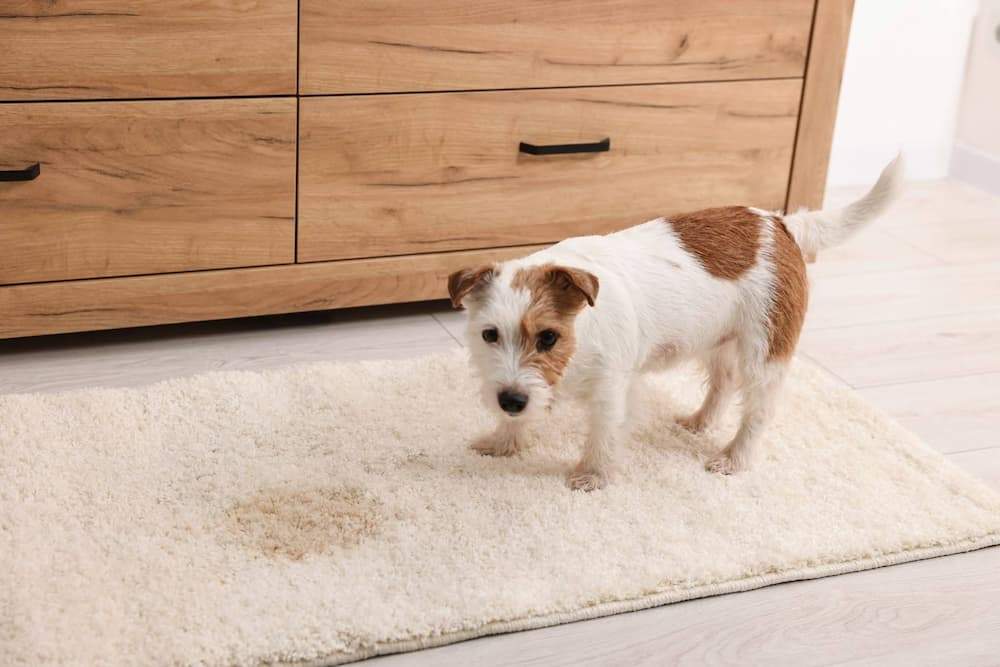
Is It Behavioral or Medical? How To Tell Why Your Dog is Peeing in the House
One of the most important questions to answer is whether your dog’s accidents are behavioral or related to a medical issue. The approach you take will depend on that distinction.
Behavioral Causes of Dog Peeing in the House
Behavioral causes of a dog peeing in the house will usually follow a pattern. You may notice:
- Accidents tied to specific situations (guests, stress, being left alone)
- Small amounts of urine, often linked to marking
- Repeated accidents in the same areas of the house
- Signs of anxiety, excitement, or submission before it happens
Medical Causes of Dog Peeing in the House
Medical causes of a dog peeing in the house tend to feel more unpredictable. Watch for:
- Frequent urination or accidents happening without warning
- Increased thirst or changes in water intake
- Large amounts of urine
- Accidents during sleep or rest
- A sudden change in habits with no clear trigger
If your dog was reliably house-trained and then starts having accidents out of the blue, it’s worth checking in with your veterinarian. When in doubt, it’s always safer to rule out a medical issue first. Once you know your dog is healthy, you can focus on training or behavioral adjustments with more confidence.
What Should I Do Right After My Dog Has an Accident?
It’s easy to feel frustrated in the moment, but how you respond right after an accident can make a big difference in whether the behavior improves or continues.
Start by staying calm. Punishing or scolding your dog after the fact won’t help them understand what went wrong. Instead, it can create more anxiety, make the issue worse and make them afraid.
In the moment, focus on a few simple steps:
- Clean the area right away using an enzymatic cleaner to remove lingering odors
- Take your dog outside immediately, even if the accident has already happened
- Stick to a neutral tone – no punishment, just a reset
- Pay attention to timing, including how long it had been since their last bathroom break
Over time, these small actions help reinforce better habits. If accidents continue, it’s a sign to adjust your routine or take a closer look at what might be causing the behavior.
How To Stop a Dog from Peeing in the House
Once you understand the cause – and clean up the mess – the next step is figuring out how to stop your dog from peeing in the house. There’s no one-size-fits-all solution, but a consistent, thoughtful approach can make a big difference.
1. Go to the Veterinarian to Rule Out Medical Issues
Before focusing on training, it’s important to rule out health concerns. If your dog randomly peeing in the house becomes frequent, a vet visit can help identify infections, incontinence, or other conditions that need treatment.
2. Identify the Trigger
Look for patterns. Did the behavior start after a change in routine, environment, or household dynamics? Identifying what triggered the behavior of peeing in the house can help you address the root cause rather than just the symptom.
3. Take Your Dog Outside to Potty More
Increasing bathroom breaks can prevent accidents while you work on the underlying issue. If your dog keeps peeing in the house, they may not be getting outside often enough, especially during times of stress or change.
4. Use Enzymatic Cleaners
Dogs are more likely to return to spots where they can still smell urine. Enzymatic cleaners break down odor at the source, helping prevent repeated accidents in the same area. IF you can’t figure out why your dog keeps peeing in the house, the right cleaner could be the solution.
5. Hire a Professional Behaviorist or Trainer
If the issue is behavioral, professional guidance can help. A trainer or behaviorist can work with you to address anxiety, marking, or training setbacks in a structured way.
Need Veterinary Assistance for Your Dog Peeing in the House? Find an UrgentVet Near You!
If accidents of your dog peeing in the house are becoming more frequent or you’re noticing other changes in behavior, it’s worth getting a professional opinion. UrgentVet provides convenient, compassionate care for non-life-threatening conditions, including urinary concerns and sudden behavioral changes.
 Whether you’re trying to figure out why your dog is peeing everywhere or you’re dealing with a dog that has never had accidents before, our teams are here to help you get clear answers and a plan that works.
Walk in or book an appointment online at a location near you.
Dog Peeing in the House FAQs
When Should I Be Worried About My Dog Peeing Inside?
Occasional accidents can happen, but frequent urination, sudden changes in behavior, or signs of discomfort should not be ignored. If your dog is having repeated accidents or showing other symptoms like increased thirst or lethargy, it’s time to consult your veterinarian.
Why Is My Dog Peeing on My Bed?
Dogs may urinate on beds due to stress, scent marking, or anxiety. Because your bed carries your scent, it can feel like a safe or significant place to mark. Medical issues or incomplete potty training can also play a role.
Why Is My Potty-Trained Dog Suddenly Peeing in the House?
This is one of the most common concerns pet parents face. If your dog is fully trained and then regresses, it often points to a medical issue, stress, or a change in routine. If your dog is suddenly peeing in the house, a closer look at recent changes and a vet check are the best next steps.
Photographer: New Africa / Shutterstock