Your dog’s gums can reveal a surprising amount about their overall health. In most cases, healthy gums are pink and moist, though black or brown pigmentation may be completely normal for some dogs. This expert UrgentVet guide to Dog gum color covers what different dog gum colors can mean, normal healthy dog gums vs unhealthy, how to check them at home, and which changes deserve veterinary attention.
What Color Are Healthy Gums in Dogs?
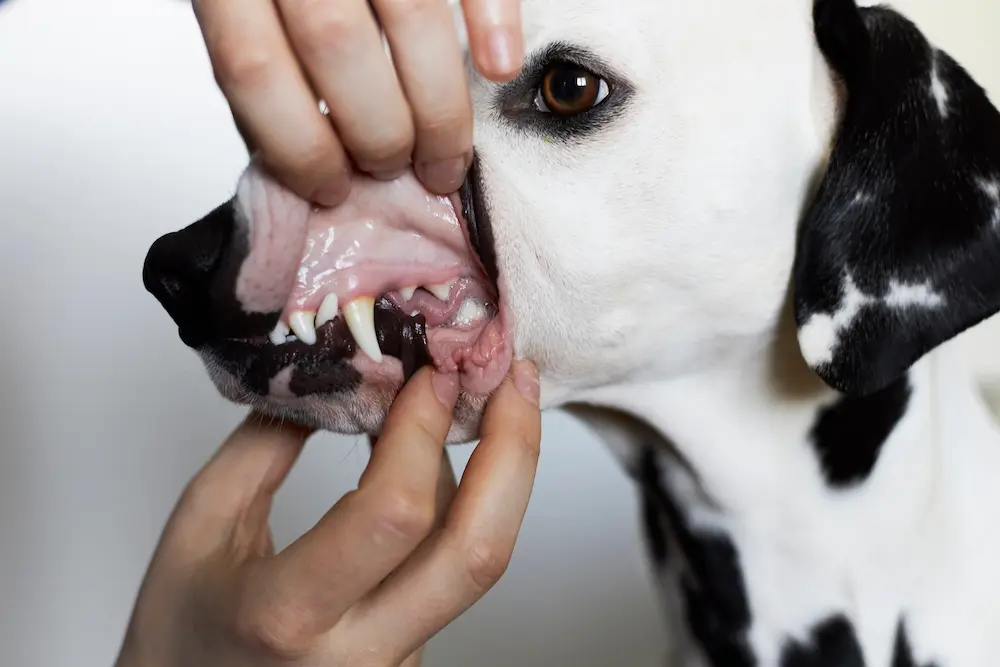
The normal color of healthy dog gums vs. unhealthy gums is easiest to judge when you already know what your dog’s mouth typically looks like. For many dogs, the color of healthy gum tissue is light or medium pink, moist, and smooth. The gums should not look unusually pale, intensely red, blue, gray, or yellow.
Some dogs have naturally brown, black, or spotted gums. Pigmentation that has been present for years and stays consistent is usually normal. Try to find a small pink area you can use for future comparisons.
Healthy gums in dogs should also feel moist rather than dry, sticky, or tacky. When gently pressed, a pink section will briefly turn white and then return to its normal color within about one to two seconds. Veterinarians call this capillary refill time, and it provides a quick indication of how well blood is circulating.
Gum Colors in Dogs and What They Mean
Different dog gum colors can point to problems involving blood flow, oxygen, temperature, dental health, or internal organs. Gum color in a dog alone cannot provide a diagnosis, but a clear change from your dog’s normal appearance is worth taking seriously. Below is a breakdown of different gum colors in dogs and what they mean.
Pale Pink or White Gums
Gums that look washed out, very light pale pink, or white gums in dogs may indicate anemia, blood loss, shock, poor circulation, or certain heart problems. Anemia can result from internal bleeding, immune-mediated disease, parasites, clotting disorders, kidney disease, toxins, or cancer.
A dog with pale gums may also seem weak, tired, cold, unsteady, or short of breath. White gums paired with collapse, a swollen abdomen, heavy bleeding, or difficulty breathing require immediate emergency care.
Slightly Red Gums With Inflammation
Redness concentrated along the gumline is commonly associated with gingivitis, dental disease, or oral infection. If your dog has slightly red gums with inflammation, you may also notice bad breath, plaque, tartar, drooling, bleeding, or discomfort while eating.
Mild gum irritation can occur while puppies are teething, but ongoing redness in an adult dog should be evaluated. Dental inflammation tends to worsen without care and may eventually cause pain, infection, and tooth loss.
Cherry Red Gums
Bright or cherry red gums in dogs are different from mild redness around a tooth. This widespread color change can occur with heatstroke, severe inflammation, toxin exposure, carbon monoxide poisoning, or certain stages of shock.
Look for heavy panting, weakness, vomiting, confusion, collapse, or an unusually high body temperature. Bright red gums during hot weather or after vigorous activity call for immediate veterinary attention.
Blue, Gray, or Purple Gums
Blue, gray, or purple gums can mean that your dog’s blood is not carrying enough oxygen. Possible causes of grey, purple or blue gums in a dog includes airway obstruction, severe lung disease, heart disease, choking, hypothermia, or another critical circulation problem.
This color change, known as cyanosis, is always an emergency. Keep your dog calm, minimize activity, and go directly to an emergency veterinary hospital. Do not place your hands in the mouth unless you can clearly see an object that can be removed safely.
Yellow Gums
Yellow gums in dogs may be a sign of jaundice, also known as icterus. This discoloration can develop with liver disease, bile duct problems, or conditions that rapidly destroy red blood cells.
The whites of the eyes, inner ears, and skin may also look yellow. Because the underlying causes can be serious, schedule prompt veterinary care rather than waiting for the color to improve.
Brown or Black Spots on Dog Gums
Flat brown or black spot areas in dog gum tissue can be completely normal, particularly when they have been present for as long as you can remember. Pigment may appear as small freckles, larger patches, or mostly dark gum tissue.
New spots, changing borders, raised areas, bleeding, sores, or growths should be checked by a veterinarian. A naturally dark mouth does not prevent oral disease, so continue looking for swelling, redness, odor, or changes around the teeth.
Need Veterinary Assistance? Find an UrgentVet Near You!
Most variations in gum pigmentation are harmless, especially when they have always been part of your dog’s normal appearance. A new or dramatic color change is different and deserves attention.
UrgentVet provides same-day care for stable dogs with concerning mouth changes, dental discomfort, or other non-life-threatening symptoms. Walk in or check in online at your nearest location today!
FAQs about Dog Gum Colors & What They Mean
What Color Should Healthy Dog Gums Be?
Most healthy dog gums are light to medium pink in color and moist. Some dogs naturally have black, brown, or spotted areas, which can also be normal when the pigmentation is flat, unchanged, and free of swelling or sores.
What Gum Color Is Dangerous in Dogs?
Gum colors that are dangerous in dogs include blue, purple, grey, white, yellow and intense cherry red gums. Blue, gray, purple, white, or intensely cherry red gums can signal an emergency involving oxygen, blood flow, heatstroke, shock, or blood loss. Yellow gums also require prompt evaluation because they may indicate liver disease or red blood cell destruction.
How Do I Check My Dog’s Gum Health at Home?
To check your dog’s gum health at home, gently lift your dog’s lip in good lighting and check the color, moisture, and gumline. Press briefly on a pink area; it should turn white and return to pink within one to two seconds. Stop if your dog resists or appears distressed.
Are Black or Spotted Gums Normal in Dogs?
Yes, black or spotted gums can be normal in dogs. Many dogs have harmless dark pigmentation on their gums, tongue, or lips. Long-standing flat spots are generally normal. New, raised, bleeding, uneven, or changing areas should be examined by a veterinarian.
When Should I Call the Vet About My Dog’s Gums?
You should call the vet when you notice a new color change, persistent redness, bleeding, sores, swelling, odor, or an unusual growth in your dog’s gums. Seek emergency care for pale or white gums with weakness, blue or gray gums, cherry red gums with overheating, or any gum change paired with breathing difficulty or collapse.
Can Dehydration Change a Dog’s Gums?
Dehydration can change a dog’s gums, often making the gums feel dry or sticky rather than causing one specific color. Severe dehydration may also affect circulation and capillary refill time. Vomiting, diarrhea, heat exposure, and poor water intake can all contribute.
Can Dental Disease Change Gum Color?
Yes, dental disease can change gum color in dogs. Gingivitis commonly causes a red or swollen line around the teeth. Dental disease may also lead to bleeding, bad breath, pain, loose teeth, or reluctance to eat. Veterinary dental care can help prevent the problem from progressing.
Photographer: Nadzeya Sheima / Shutterstock