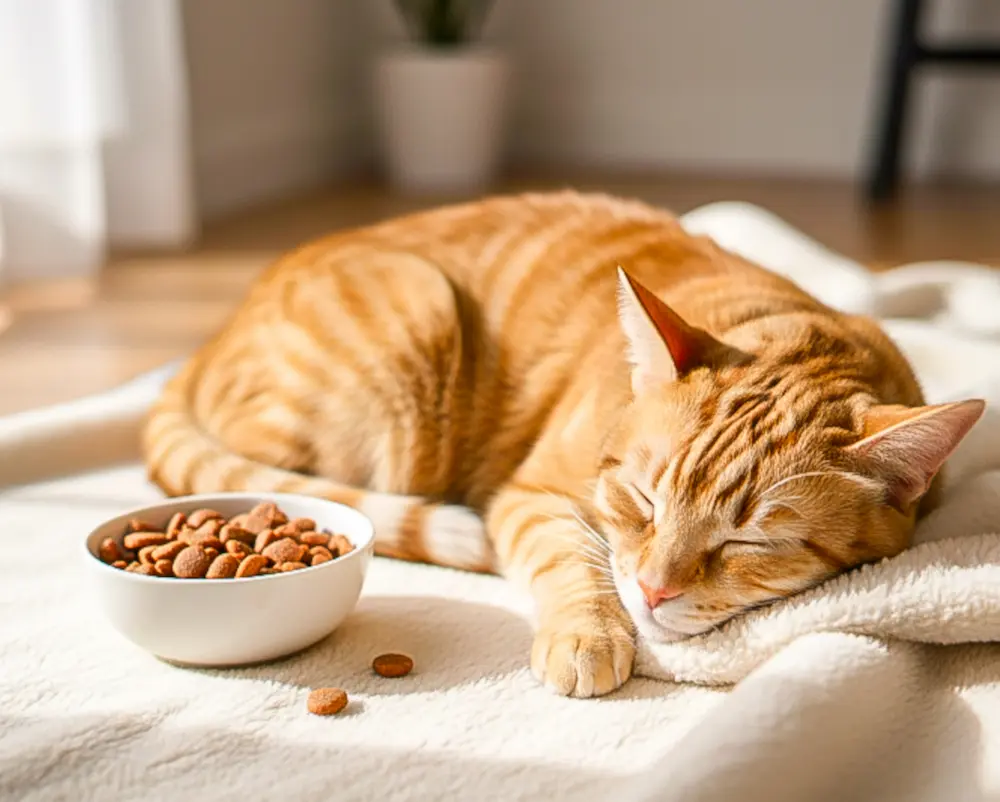
Lethargy in cats is a change in energy or responsiveness that can accompany anything from a minor, temporary issue to an illness requiring professional care. Cats spend plenty of time sleeping, but you know when your cat’s behavior feels different.
Hiding through mealtime, neglecting their coat, or barely reacting to a favorite toy can all signal that something is wrong.
In this UrgentVet guide, our experts cover what to know about lethargy in cats, including the causes, symptoms and what to do if your kitten or cat is lethargic, not eating, moving, drinking and more.
Get expert insights on how you can tell if your cat is lethargic and whether you should see a vet for your lethargic cat.
What Is Lethargy in Cats?
Lethargy is a noticeable decline in your cat’s usual energy, awareness, or interest in daily life. Your cat may seem withdrawn, weak, unusually still, or reluctant to move.
Because cats often hide signs of illness, the change may be subtle.
You might notice that your cat no longer comes for meals, has stopped jumping onto a favorite chair, or stays curled up when something would normally get their attention.
Your cat’s usual routine is the best point of comparison.
Symptoms & Signs of Lethargy in Cats
Low energy can look different depending on your cat’s age, personality, and normal activity level. Common symptoms and signs of lethargy in cats include:
- Sleeping noticeably more than usual
- Hiding or resting in unfamiliar places
- Remaining in one spot for long periods
- Moving slowly or appearing stiff
- Avoiding stairs, furniture, or favorite perches
- Showing little interest in toys or interaction
- Failing to come for meals or treats
- Grooming less, leaving the coat dull or unkempt
- Responding slowly to voices, sounds, or touch
- Appearing weak, unsteady, or reluctant to stand
- Using the litter box less often or having accidents
What’s the Difference Between a Lethargic Cat and a Tired Cat?
If you’re trying to tell the difference between a lethargic cat and a tired cat – a tired cat usually returns to normal after resting. They still wake for food, respond to attention, move comfortably, and show interest in familiar activities.
Lethargy in cats persists despite rest. Your cat may remain disengaged, move slowly, stop grooming, or show little response to food and toys.
To check how they are doing, offer a favorite treat, encourage them to walk across the room, and watch whether they are eating, grooming, and using the litter box normally.
Is It Normal for a Cat to Be Lethargic?
Sometimes, it is normal for a cat to appear lethargic. Cats may be a little quieter after a busy day, a stressful car ride, a vaccination, sedation, or a veterinary procedure.
In those situations, they should still respond to you, show some interest in food or attention, and begin acting more like themselves within the expected recovery period.
The bigger concern is a change that feels unusual for your cat. A sudden drop in energy, especially when it lasts into the next day or comes with changes in eating, breathing, movement, grooming, or litter box habits, is a good reason to call your veterinarian.
Many mild-to-moderate cases can be seen at an urgent veterinary clinic the same day. Collapse, labored breathing, or difficulty waking your cat calls for emergency care.
Causes of Lethargy in Cats
Many conditions can reduce a cat’s energy, particularly those that cause pain, fever, nausea, dehydration, or weakness. Other symptoms and your cat’s health history can help narrow down the cause. Some notable causes of lethargy is cats may include:
Infections
Bacterial, viral, fungal, and parasitic infections in cats may cause fatigue, fever, appetite loss, vomiting, diarrhea, coughing, or nasal discharge.
Kittens and unvaccinated cats may be more vulnerable to serious infectious illnesses.
Vaccinations and Medications
Mild sleepiness in cats can occur for a short time after vaccination, sedation, or certain medications.
Contact your veterinarian if the lethargy is severe, lasts longer than expected, or occurs with facial swelling, breathing trouble, vomiting, or collapse.
Pain
Dental disease, arthritis, bladder inflammation, abdominal discomfort, and other painful conditions can make cats quieter and less active.
Some cats stop jumping, avoid stairs, resist handling, or hide rather than showing obvious signs of pain.
Trauma and Injuries
Falls, bites, sprains, trauma and other injuries in cats may not leave an obvious wound. Hiding, limping, swelling, rapid breathing, or reluctance to move should be evaluated promptly.
Digestive Illness
Poor digestive health and illness in cats can lead to symptoms of vomiting, diarrhea, constipation, pancreatitis, and intestinal inflammation.
These symptoms of digestive illness can leave a cat feeling drained. Fluid loss may also lead to dehydration and weakness.
Chronic Medical Conditions
Chronic medical conditions in cats, such as, kidney disease, liver disease, diabetes, thyroid disorders, heart disease, and cancer can all cause low energy.
Other clues may include weight changes, increased thirst, increased urination, vomiting, or appetite changes.
Anemia
Anemia reduces the blood’s ability to carry oxygen. Cats with amenia may become weak, tire easily, breathe faster, or develop pale gums.
Urinary Problems
Urinary problems in cats, such as, bladder inflammation, crystals, stones, urinary tract infections and/or urinary obstruction may cause lethargy alongside other signs.
Other signs of of urinary issues may include straining, repeated litter box visits, genital licking, or little to no urine. An inability to urinate is an emergency, particularly in male cats.
Toxins and Foreign Objects
Human medications, lilies, chemicals, essential oils, and other toxins in cats can cause low energy along with vomiting, drooling, tremors, or seizures.
Swallowed string, toys, or other objects may also cause an intestinal blockage.
Stress and Environmental Changes
Increased stress and environmental changes can also cause a cat to be lethargic. Moving, travel, household conflict, or a new person or pet can temporarily cause hiding and reduced activity.
Persistent lethargy in cats should not be blamed on stress until medical causes have been ruled out.
When Should You Call a Vet About Lethargy in Your Cat?
If your cat is lethargic, call a veterinarian when the change appears suddenly, continues for several hours, or lasts into the next day.
Same-day care is especially appropriate if your cat is eating less, hiding continuously, moving differently, or showing another symptom.
Before the vet visit, note:
- When the behavior began
- When your cat last ate and drank
- Whether they have urinated and passed stool
- Any vomiting, diarrhea, coughing, or sneezing
- Possible access to toxins or foreign objects
- Recent medications, vaccinations, travel, or injuries
Lethargic Cats With Other Symptoms
Seek same-day veterinary care when a lethargic cat’s low energy occurs with other symptoms, like, vomiting, diarrhea, pain, limping, reduced appetite, fever, or changes in drinking or urination.
Go directly to an emergency veterinary hospital if your cat has:
- Labored, open-mouth, or unusually rapid breathing
- Pale, blue, gray, or yellow gums
- Collapsed or become difficult to wake
- Lost the ability to stand or use the hind legs
- Repeatedly straining to urinate without producing urine
- Experienced seizures or severe tremors
- A known or suspected toxin exposure
- Heavy bleeding or signs of major trauma
- Repeated vomiting with profound weakness
A cat that has eaten little or nothing for 24 hours also needs veterinary attention. Cats can develop serious complications when they go too long without adequate nutrition.
Diagnostics & Treatment for Your Cat
Getting the proper treatment for your cat, a vet will need to determine the cause of lethargy through examination, diagnostics and testing. Your veterinarian will ask about the timing of the change, appetite, medications, litter box habits, and other symptoms.
The exam may include checking hydration, temperature, gum color, breathing, abdominal comfort, and mobility.
Testing may include bloodwork, fecal testing, urinalysis, X-rays or ultrasound, and testing for thyroid issues or infectious disease.
Treatment for lethargy in cats depends on the cause and may involve:
- Fluids for dehydration or ongoing fluid loss
- Pain relief for injuries, dental disease, arthritis, or inflammation
- Anti-nausea medication when vomiting or nausea is affecting appetite
- Antibiotics or parasite treatment for confirmed infections
- Nutritional support when a cat is not eating enough
- Urinary treatment for bladder disease, crystals, or obstruction
- Long-term medication or dietary changes for chronic conditions
More serious cases of cat lethargy may require hospitalization, surgery, oxygen support, or referral to an emergency or specialty hospital.
Need Veterinary Assistance? Find an UrgentVet Near You!
If your cat is unusually quiet, hiding, eating less, or no longer taking part in their normal routine, UrgentVet can help you get a clear diagnosis and treatment plan.
Our after hours vet care clinics provide care for mild-to-moderate illnesses and other non-life-threatening concerns. Walk in or check in online at your local UrgentVet for compassionate care and a clear plan for what comes next.
Lethargy in Cats FAQs
Are There Home Remedies for Lethargic Cats?
There is no universal home remedy to treat cat lethargy because low energy can have many causes. Keep your cat indoors, comfortable, and near fresh water and a clean litter box while arranging care.
Do not give human medication, force-feed, or delay a veterinary visit when other symptoms are present.
Why Is My Cat Suddenly Lethargic and Not Eating?
If your cat is suddenly lethargic and not eating, the possible causes may include pain, infection, nausea, digestive illness, urinary disease, toxin exposure, and organ problems.
Cats should not go extended periods without food, so contact a veterinarian promptly if your cat has stopped eating, especially as the change approaches 24 hours.
Why Is My Cat Lethargic but Eating and Drinking?
Maintaining an appetite is reassuring, but it does not rule out pain, infection, arthritis, medication effects, or early illness. If your cat is lethargic but eating and drinking, it is important to monitor movement, grooming, litter box use, and responsiveness.
Arrange an exam if the behavior persists, worsens, or feels significantly out of character.
Why Is My Kitten Lethargic?
If your kitten in lethargic, it’s important to know that kittens can lose energy because of parasites, low blood sugar, infection, dehydration, inadequate nutrition, or congenital problems.
Since they have fewer reserves than adult cats and can decline quickly, sudden weakness or unusual sleepiness in a kitten deserves prompt veterinary attention.
What Should I Do if My Young Cat Is Suddenly Lethargic and Weak?
If your young cat is suddenly lethargic and weak, keep your cat quiet and safely contained, then contact a veterinary clinic right away.
Sudden weakness in young cats is more concerning than ordinary tiredness and may be linked to injury, infection, toxin exposure, low blood sugar, anemia, or another condition requiring treatment.
How Long Should Cat Lethargy Last Before I Call a Vet?
How long you should wait before calling the vet for lethargy in your cat depends on a few factors. Call the same day if the change is sudden, significant, or lasts for several hours.
Seek care sooner if your cat is not eating or has vomiting, pain, breathing changes, weakness, or urinary symptoms.
Photographer: Retro Vista / Shutterstock