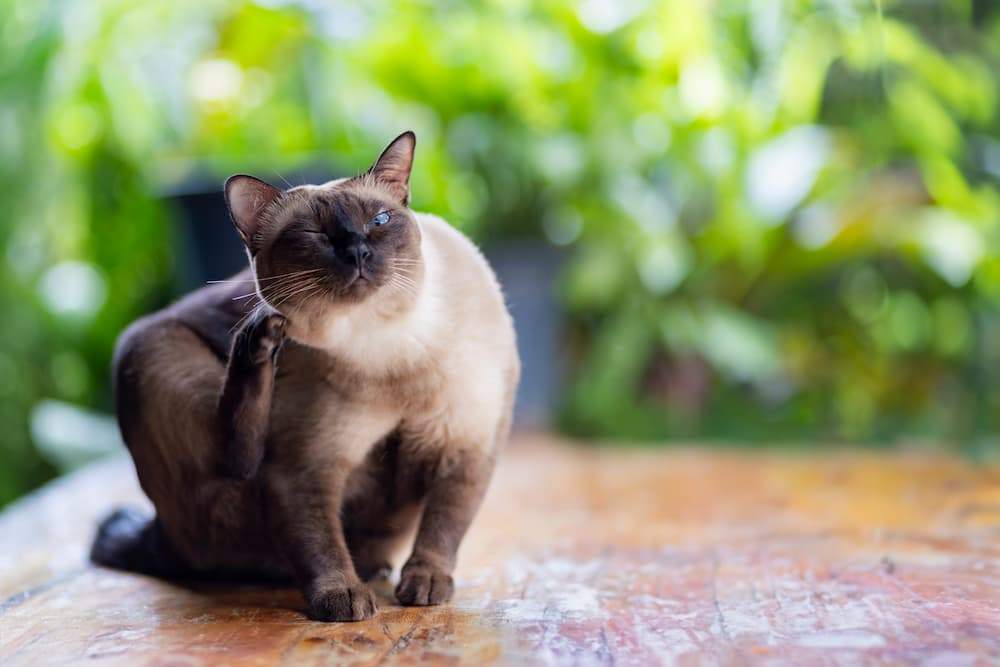
Cats can develop a wide variety of skin issues, ranging from mild irritation to serious diseases, and the signs are often subtle. Because cats are so good at hiding discomfort, any change in their coat, scratching behavior, or skin appearance should raise your awareness. In this guide, we’ll walk through the most common skin conditions in cats, help you recognize what’s happening, and explain how veterinary treatment will help.
Most Common Skin Conditions in Cats
Below are some of the most common skin conditions in cats, each with typical causes, symptoms, and what to expect if your cat is diagnosed.
Flea Allergy Dermatitis
Flea allergy dermatitis occurs when a cat is allergic to saliva from flea bites. Even a single flea can cause extreme itching, redness, scabbing, and hair loss. You might notice your cat intensely scratching at the base of the tail, the flanks, or the belly, and tiny black flea dirt specks may be visible.
Treatment typically involves eliminating cat fleas completely, applying anti‑itch medication, and sometimes prescribing a short course of steroids or antihistamines. Preventive flea control is critical: once fleas return, the cycle of allergy and scratching starts again.
Allergic Dermatitis
Allergic dermatitis in cats arises when they react to something in their environment, such as food ingredients, household chemicals, pollen, or grooming products. Unlike flea allergy, the distribution might vary: ears, face, paws, or the full body. Signs include red or inflamed skin, excessive grooming, ear infections, and small bumps.
Your vet may recommend an elimination diet, topical treatments, or testing for food/environmental allergens. Even with good management, re‑exposure to allergens can trigger flare‑ups, so long‑term care is needed. Learn more about the different types of allergies in cats.
Feline Acne
Similar to acne in humans, feline acne appears as blackheads or pus‑filled bumps on the chin and lip line of cats. Causes may include poor grooming, plastic food dishes (which harbor bacteria), stress, or underlying skin issues. Left untreated, it can progress to infection, leading to swelling, discomfort, or scabs.
Treatment involves cleaning the area, switching to stainless steel bowls, applying topical antiseptics, and possibly giving antibiotics if infection has set in.
Superficial Pyoderma
Superficial pyoderma is a bacterial skin infection that often follows scratching or trauma. You’ll see red, moist lesions, pustules, and sometimes crusted spots with hair loss. It typically appears where the cat has scratched intensely or there’s moisture accumulation (such as in skin folds).
Treatment involves antibiotics, antiseptic shampoos or sprays, and resolving the initial cause (like an allergy or a parasite) so this doesn’t recur.
Ringworm
Despite its name, ringworm in cats is a fungal infection, not an insect. It causes circular patches of hair loss, scaling, and sometimes redness. Cats may groom these areas obsessively, which is why it’s one of the many cat skin problems with scabs or crusty spots.
Because it is zoonotic (can pass to humans and other pets), prompt diagnosis and treatment are crucial. Treatment includes topical antifungals, systemic medication, and environmental cleaning to remove fungal spores.
Abscess
A cat abscess is a localized infection filled with pus, often resulting from a bite wound (frequently from catfights) or a foreign object. Initially, you may notice swelling, warmth, pain, and often a bad odor if the pus drains. Your vet may need to lance the abscess, drain it, flush the cavity, and prescribe antibiotics. Left untreated, it can spread or worsen, so prompt care is key.
Dry Skin
Dry skin may seem benign, but it can contribute to scratching, hair breakage, and secondary infections. Causes include low humidity, poor diet, fleas, or underlying illness. You may notice a dull coat, flaky skin, or patches of itchiness.
Addressing cat dry skin involves improving diet (adding omega‑3 fatty acids), ensuring hydration, controlling parasites, and using humidifiers or gentle skin‑friendly grooming products.
Eosinophilic Granuloma
This is a less common but distinctive condition where clusters of inflammatory cells produce ulcerated, raised, or sometimes rod‑shaped lesions, often on the upper lip, thighs, or ear margins. The cause is unknown but is thought to be linked to allergies (food or environmental).
Symptoms include lumps or ulcers, and your vet will typically perform a biopsy, then treat with steroids or immunosuppressants to control the inflammation.
Tumors and Skin Growths
Not all cat skin issues are benign. Skin tumors, such as mast cell tumors, sebaceous adenomas, or squamous cell carcinoma, may appear as new lumps, red or ulcerated masses, or slow‑growing nodules. Your vet may recommend fine‑needle aspiration or biopsy to determine the nature of the growth.
Treatment can involve surgical removal, monitoring, or adjunct therapies depending on type and stage.
Pemphigus Foliaceus
This rare autoimmune disease causes crusting, scaling, and ulceration, primarily on the face, ears, and paws. Pemphigus foliaceus is sometimes mistaken for cat psoriasis, but true psoriasis is extremely rare in cats.
Examples of this condition can be found in guides focused on cat skin diseases with pictures, showing thick yellow crusts and hair loss. The immune system attacks the skin’s outer layer, and prompt veterinary treatment (often with immunosuppressive therapy) is essential. Without treatment, it can become painful and widespread.
Causes of Skin Conditions in Cats
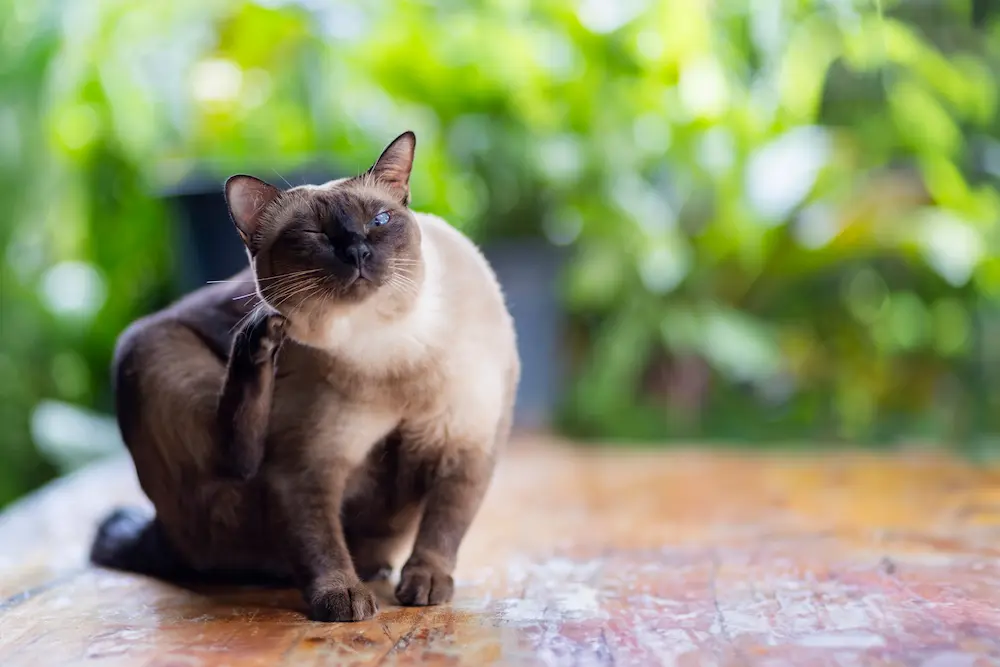
Skin trouble in cats often arises from a few common roots: parasites, allergens, infections, trauma, or systemic disease. Understanding the cause helps guide treatment and prevention.
For example:
- Fleas and mites cause parasitic skin issues.
- Environmental or food allergens trigger allergic dermatitis or eosinophilic granuloma.
- Bacterial or fungal pathogens can lead to pyoderma or ringworm.
- Internal health conditions, such as endocrine disorders or immune dysfunction, can also manifest through the skin.
Symptoms of Skin Conditions in Cats
Skin issues in cats can be subtle or dramatic, but they almost always signal that something isn’t right beneath the surface. Watch for these signs, especially if they appear suddenly or worsen over time:
- Excessive scratching, biting, or licking – Especially around the ears, belly, paws, or tail base.
- Red, inflamed, or irritated skin – This may appear raw or warm to the touch.
- Hair loss – Patchy thinning or bald spots, often around areas of irritation.
- Scabs or crusty patches – Common with allergic reactions, wounds, or certain infections.
- Flaky or dry skin – White flakes may appear on the coat or bedding.
- Bumps, pustules, or acne-like lesions – Especially on the chin or lips.
- Open sores or ulcers – May be moist or ooze, and often indicate infection.
- Lumps or unusual growths – Any new mass should be evaluated by a vet.
- Unpleasant odor from the skin or coat – May suggest infection or abscess.
- Changes in grooming behavior – Overgrooming or a lack of grooming can both be red flags.
- Thickened or darkened skin – Often a sign of chronic inflammation.
- Ear infections – Head shaking, odor, discharge, or redness inside the ear.
- Behavioral changes – Irritability, hiding, or decreased activity may signal discomfort.
How Veterinarians Diagnose Skin Conditions in Cats
When you bring your cat in, the vet will begin with a full history and physical exam, asking about diet, outdoor access, grooming habits, and any household changes. They’ll examine the skin, coat, ears, and overall body condition.
Diagnostics may include skin scrapings (to check for mites or fungi), fungal cultures, bacterial culture and sensitivity, biopsies, allergy testing, or bloodwork to check for systemic disease. Photographs or comparison with cat skin problems pictures may help identify less obvious conditions.
The vet then develops a treatment plan based on the specific diagnosis.
Treatment of Skin Conditions in Cats
Your vet will be the expert source when it comes to how to treat cat skin problems, especially because an accurate diagnosis is the key to effective treatment.
Common treatment options for cat skin conditions may include:
- Flea & Parasite Control: Prescription preventatives are essential if fleas, mites, or other parasites are involved.
- Antibiotics or Antifungals: Used for bacterial skin infections (like pyoderma) or fungal infections (like ringworm).
- Steroids or Antihistamines: Reduce itching and inflammation, especially in allergic or autoimmune conditions.
- Medicated Baths or Wipes: Helpful for feline acne, infections, or general skin irritation.
- Omega-3 Fatty Acids: Support skin health and reduce inflammation in cats with chronic conditions.
- Immune Modulating Drugs: Used for autoimmune disorders like pemphigus.
- Surgical Removal: Skin masses or abscesses may require drainage or removal.
- Dietary Trials: Food allergies may be treated with prescription hypoallergenic diets.
- Environmental Adjustments: Reducing allergens or irritants in your home can aid long-term management.
Recovery and Management of Skin Conditions in Cats
Recovery depends on both the condition and your cat’s response. With good treatment, many cats heal within weeks, while others may require long‑term management. As a cat progresses, you’ll monitor healing, maintain treatment schedules, protect against recurrence, and check regularly for new or changing lesions.
Ongoing management may include regular grooming, maintaining a parasite‑free environment, using hypoallergenic diets, and scheduling follow‑up vet exams.
Prevention of Skin Conditions in Cats
Preventing skin trouble is far easier than treating it. Keep up with routine parasite prevention, maintain a clean home and litter box area, provide a high‑quality diet rich in fatty acids for skin health, groom your cat often (especially long‑haired breeds), and reduce stress by maintaining a stable environment.
Also, keep an eye on your cat’s skin regular routine checks. Rather than waiting for a full‑blown issue, you’ll spot early signs of cat skin problems and deal with them quickly.
Need Veterinary Assistance? Find an UrgentVet Near You!
When your cat’s skin isn’t behaving normally, whether it’s sudden hair loss, scabbing, or a suspicious lump, don’t wait. UrgentVet offers compassionate, prompt care for your stepping stone between your regular vet and emergency situations.
Find an UrgentVet location near you to walk in or schedule online today!
Image Credit: Witsawat.S / Shutterstock